
Essential-circuit backup
Selected circuits are supplied during an outage. This can focus capacity on the most useful loads, giving a practical balance between running time, equipment size and cost.
Independent design · Installation · Support
Keep the right parts of your property operating during a power cut, with battery backup designed around your priorities and the limits of the site.
Your site, your priorities
Lighting, refrigeration, communications, heating controls and water pumps can make a significant difference during an outage. A business may also need to protect selected equipment or shut systems down safely.
SES starts with those priorities, then assesses power demand, required running time and acceptable interruption. The result is a defined backup strategy for the circuits and equipment that matter to you.
The design decisions
The circuits to be supplied and their simultaneous demand determine the system arrangement. Battery capacity is only one part of that decision.
Selected circuits are supplied during an outage. This can focus capacity on the most useful loads, giving a practical balance between running time, equipment size and cost.
A wider backup supply can be assessed where the installation and system capacity allow it. Large appliances, EV charging and other heavy loads may still need restrictions or automatic control.
Setting clear expectations
Having solar panels or a battery does not automatically mean a property will remain powered during an outage. The equipment, changeover arrangements and circuits must support that mode of operation.
Some equipment cannot tolerate even a short interruption. Where that matters, we assess the required transfer performance and whether dedicated UPS protection is needed, rather than treating every backup system as an uninterrupted supply.
What SES delivers
Agree which loads need protection, how long they should run and whether any interruption is acceptable. Review the existing supply and distribution arrangements.
Specify the battery, inverter and changeover arrangement. Assess how existing solar, generators and monitoring can be integrated, subject to compatibility.
Commission the system, test loss and restoration of the normal supply, and explain reserve settings, operating limits and what to expect during an extended outage.
SES in practice
Explore whole-home backup with Fogstar storage and a Victron workshop system with backup for selected circuits.
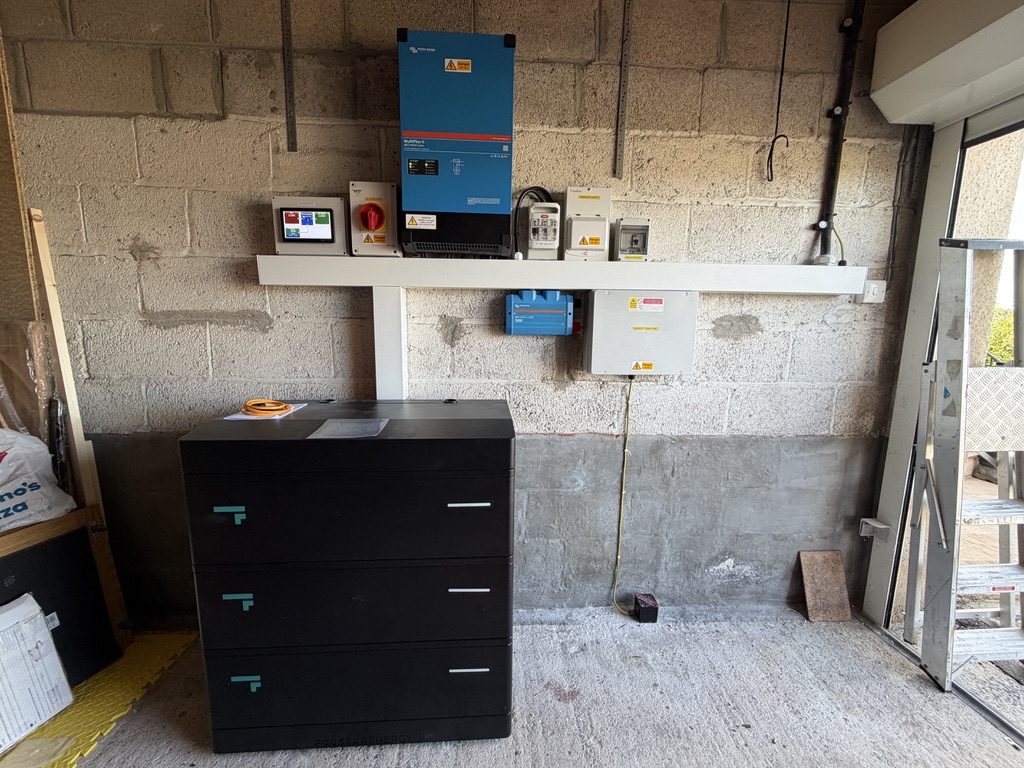
Residential backup
A 10 kVA Victron MultiPlus-II, 48.3 kWh of nominal storage and a manual bypass for servicing when the grid is available.
Design, supply & commissioning
Read the case study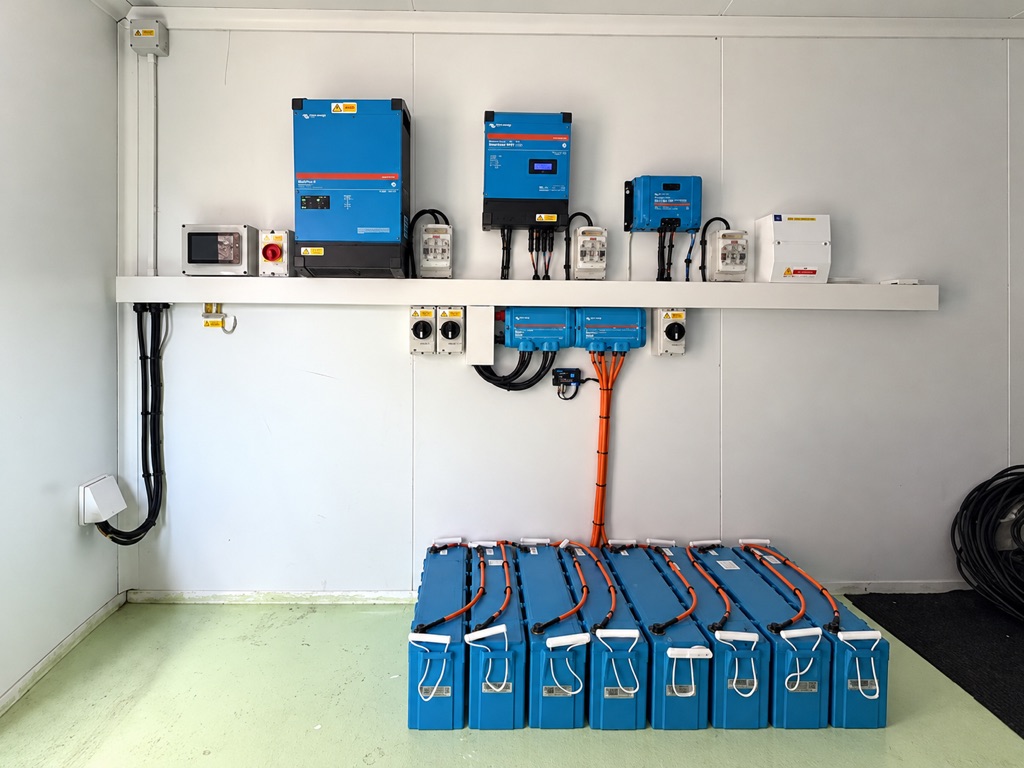
Solar, storage & selected-circuit backup
A bespoke Victron system working alongside 22 solar panels, with a dedicated backup board for selected circuits.
Integrated with the property’s electrical system
Read the case studyPractical answers
Every site is different. These are useful starting points for a conversation about yours.
Running time depends on the usable energy available when the outage begins and the loads being supplied. Conversion losses, battery settings and any supported solar or generator input also affect it. We size the system against an agreed set of loads and operating assumptions.
Not necessarily. Many grid-connected solar installations stop producing when the grid fails. Continued operation requires a suitable backup system and compatible solar integration; we assess the existing equipment before confirming what is possible.
Yes. A suitable battery system can be charged from the grid and held ready for an outage. Solar or generator charging may also be considered where useful and compatible.
Yes, where the generator, inverter and controls are designed to work together. We assess charging capacity, available power, changeover and starting arrangements as part of the overall backup strategy.
Discuss your project
Tell us which services matter most and what happens at your property when the supply is lost. We will help define a practical starting point.
Talk to SES