
Daily energy use
We establish how much energy the site needs and how it is used. That informs battery capacity, generation and the periods the system needs to cover between charging opportunities.
Independent design · Installation · Support
Independent power for rural homes, farms and remote sites. Solar, batteries and generators designed around the way your site actually operates.
Your site, your priorities
A remote location, an expensive grid connection or a generator that runs for too many hours can all be reasons to consider off-grid power. The right starting point is a clear picture of what the site needs to run, when it runs and how that changes through the year.
SES assesses the practical options, designs the system and can take it through installation, commissioning and handover. We also provide independent design and technical support where you already have a delivery team.
The design decisions
A useful design accounts for everyday operation, demanding loads and the periods when renewable generation is limited.
We establish how much energy the site needs and how it is used. That informs battery capacity, generation and the periods the system needs to cover between charging opportunities.
Pumps, motors, cooking and other large loads affect inverter capacity and the way equipment can operate together. We assess starting demands as well as normal running power.
Seasonal solar output, shading and site use shape the design. Generator support and operating priorities are considered from the outset, with realistic expectations for the quieter solar months.
System integration
The controls, charging arrangements and electrical distribution matter as much as the individual products. SES brings them together around an agreed operating plan, including generator control and remote monitoring where appropriate.
We work independently of any single manufacturer. Equipment is selected for compatibility, suitability and support, with provision for future expansion where the project requires it.
What SES delivers
Review the site and loads, compare supply options, establish the system architecture and define equipment, protection and installation requirements.
Deliver the agreed installation, configure the controls and test operation across the available supply sources and intended loads.
Explain normal operation, monitoring, maintenance needs and system limits. Agree the scope of any ongoing technical support.
SES in practice
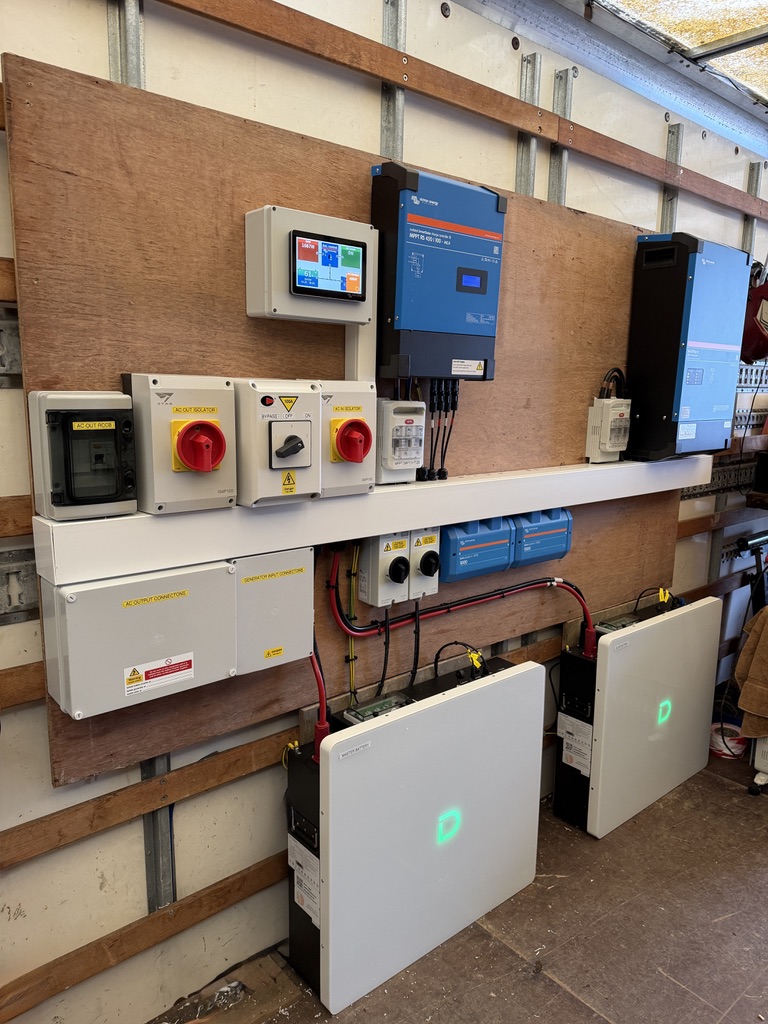
See how SES brought Victron power conversion, solar charging and Dyness storage together for a property without a grid connection.
Independent off-grid power
A 10 kVA Victron inverter, two solar arrays and 20.48 kWh of nominal Dyness storage for a property without a grid connection.
Designed with future inverter expansion in mind
Read the case studyPractical answers
Every site is different. These are useful starting points for a conversation about yours.
Yes, with a design matched to the property and its energy requirements. The assessment needs to cover winter generation, peak loads and periods of poor weather. Generator support is often part of a practical year-round solution.
That depends on demand, renewable resources, battery capacity and the level of resilience required. We assess when a generator would be needed and how it would be controlled, rather than assuming solar and batteries will cover every condition.
Yes. We can review an existing installation, investigate operating problems and assess expansion. Reusing equipment depends on its condition, compatibility and capacity, alongside the suitability of the existing wiring and protection.
The main factors are the loads, required running time, generation available, battery and inverter capacity, and the work needed on site. We establish a clear scope before pricing; a list of panels and batteries alone does not define a complete installation.
Discuss your project
Share what you know about the site. If the consumption figures are uncertain, we can help establish what needs to be measured.
Talk to SES